
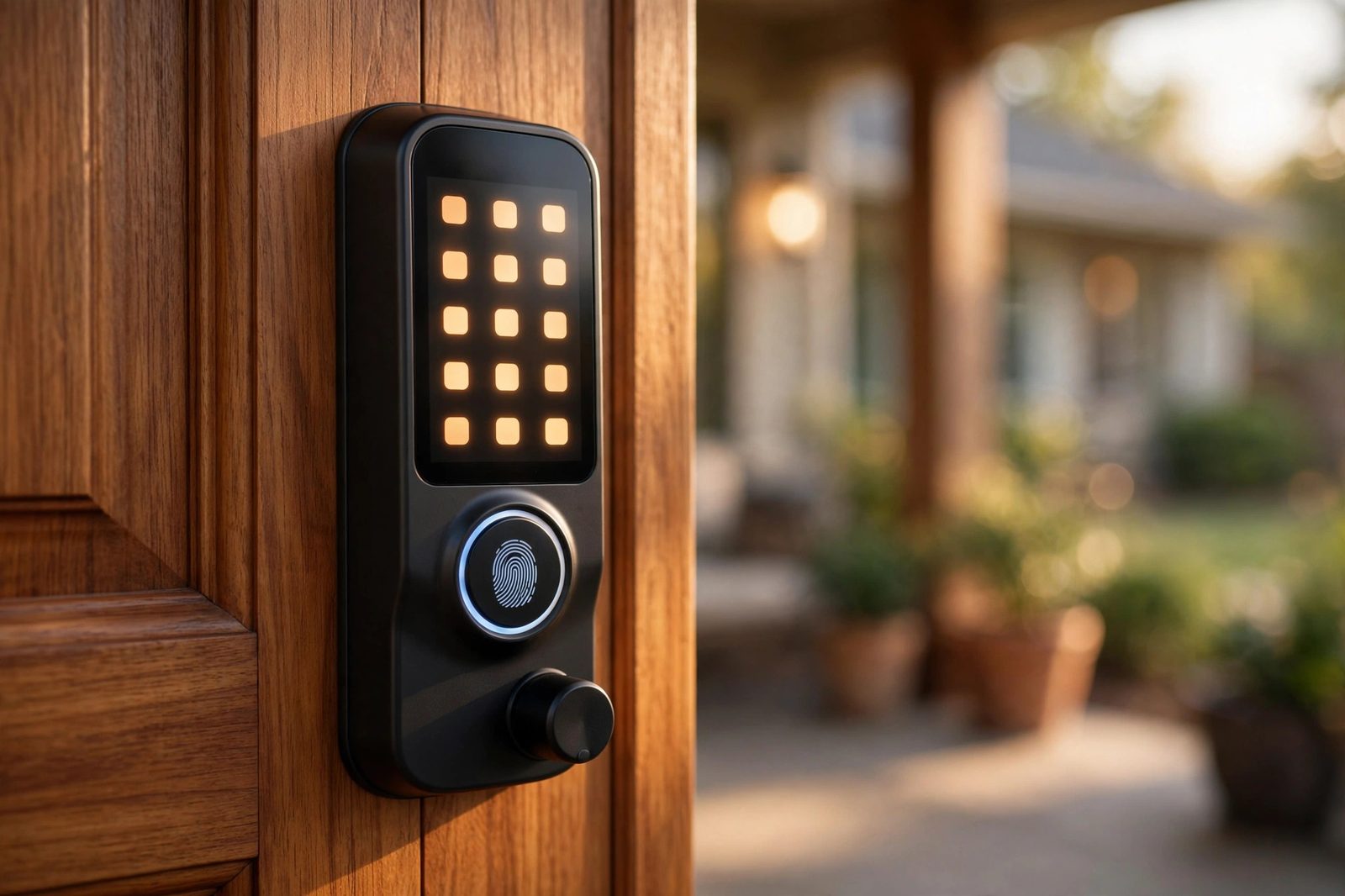
Smart locks are having a moment. Earlier this month, Ring, the doorbell company, announced its first-ever smart lock: a deadbolt with a fingerprint reader, a backlit touchscreen keypad, and control through the Ring app and Alexa. It's arriving early next year, and it has one genuinely clever trick: a small hand-powered dial on the front that lets you crank enough emergency charge into the lock if the battery ever dies. That's an elegant answer to the question every homeowner asks first: "What happens when the power runs out?"
It's good news that the lock is finally getting real competition. The lock on your front door is the one smart device that absolutely cannot be allowed to fail. But Ring's entry also comes with a catch worth understanding before you buy, and it teaches the most important lesson in smart-home shopping this year.
How Ring's lock talks to your phone, and why that decides everything
Here's what the launch announcements don't put in bold: Ring's lock connects to the outside world over Amazon Sidewalk, a shared neighborhood network Amazon built for its own devices, not over your home Wi-Fi and not over Matter or Thread. As of the announcement, neither Amazon's materials nor Ring's product page mentions Matter, Thread, Z-Wave, or Zigbee support.
That has a direct consequence: this lock belongs to the Ring-and-Alexa world. If your house runs on Apple Home, Google Home, or Samsung SmartThings, the Ring lock won't join them. It will sit beside your home instead of inside it: a separate app, a separate ecosystem, a lock your automations can't reach.
And this is the week the opposite bet got made, loudly. Philips Hue pushed a firmware update (1.164.2) that lets its newer bulbs run Zigbee and Matter over Thread at the same time, one bulb speaking the old language and the new universal one simultaneously. The industry is converging on Matter as the common tongue. Ring chose to keep speaking its own.
The one rule of smart-lock shopping
Before you compare fingerprint readers and keypads, answer one question: what does your home already speak?
- An Apple Home house? Wait for the Matter-native locks arriving this holiday season, including the LG deadbolt co-developed with Apple for the Apple Home Collection, which arrives in December. It was designed to live inside Apple Home from day one.
- An Alexa and Ring house? Ring's lock is for you: it will tie into your Ring cameras and Ring Alarm, and the hand-crank dial is a genuinely thoughtful touch for the dead-battery scenario.
- A mixed house, or no ecosystem yet? Pick the lock that speaks the most languages: Matter over Thread plus Bluetooth, ideally. That's the one most likely to still work with whatever you buy next year.
Why does this matter more for a lock than for, say, a light bulb? Because a bulb gets replaced in two minutes when you switch ecosystems. A lock gets fitted to your door: sized, aligned, and trusted by everyone in your house. Nobody wants to do that twice.
What to check before any smart lock goes on your door
No matter whose name is on the box, a smart lock is a physical install with physical constraints. Check these before you order:
- Door fit. Deadbolt locks care about door thickness, backset (the distance from the edge of the door to the center of the hole), and how the door aligns with the frame. Older North County doors and weatherstripping can turn a 20-minute install into a real project.
- Entry methods. Fingerprint, keypad code, phone, physical key: the best lock is the one every person in your house will actually use. If your kids' fingerprints are a coin toss after soccer practice, the keypad is the feature you'll rely on.
- Power backup. Battery-powered locks need a plan for a dead battery: a backup key, external battery terminals, or Ring's hand-crank dial. If a lock's answer is "call a locksmith," keep shopping.
- How it reaches you remotely. Wi-Fi locks need a strong signal at the front door; Bluetooth locks need a hub nearby; Sidewalk locks need the network to cover your street. The lock's connectivity has to work at your house, not in the product photos.
- One installer for the whole entry. A lock that can tell your camera to record, your porch light to turn on, and your alarm to arm. That's a smart entry, not a smart lock, and it only happens when everything was planned together.
The Escondido angle
Front-door upgrades are holiday-season upgrades in North County. Guests arriving after dark, packages on the porch, the house sitting empty during a weekend away: a smart lock plus a well-placed camera solves the real December anxieties. And just like the Apple and LG accessories we covered last week, the new locks land right when installer calendars are fullest. If you're thinking about an entry refresh this season, get the door measured, the wiring checked, and the ecosystem decision made now. The hardware slots in when it ships.