
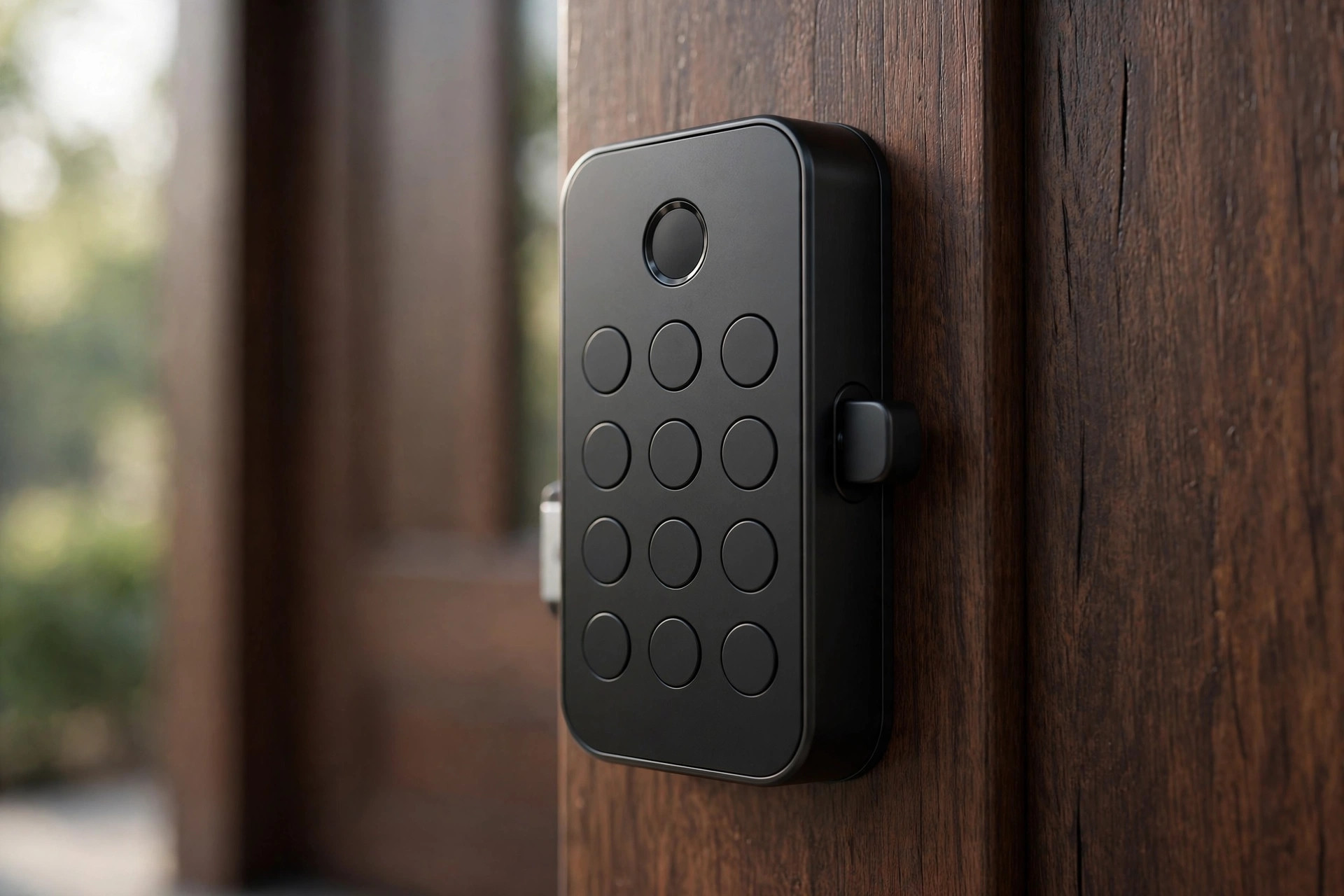
Smart locks are one of the most asked-about upgrades we install — and one of the most misunderstood. Here is the straight version: how they work, where they can let you down, and how to decide whether your front door actually wants one.
How they work
A smart lock replaces or sits on top of your existing deadbolt. You unlock with a code on a keypad, your phone over Bluetooth or Wi-Fi, a fingerprint, or sometimes a physical key as backup. Most models keep a traditional key cylinder, so a regular key still works if everything electronic fails. Installation usually takes under an hour and fits a standard door prep — no new holes in most cases.
What happens when the Wi-Fi drops
This is the question everyone asks, and the answer is reassuring: almost all smart locks work locally without the internet. Codes on the keypad, Bluetooth unlock, and fingerprints do not need Wi-Fi at all. What you lose during an outage is remote access — you cannot lock or unlock from across town, and you will not get phone notifications until the connection is back. The door itself still opens fine for anyone with a code.
Battery life
Smart locks run on standard AA batteries, and a typical household gets many months out of a set — some homes go most of a year. The lock warns you well in advance when batteries run low, both on the lock itself and through the app. Pro tip: change them when the first warning appears, not the third. And keep one physical key somewhere sensible, just in case.
Where they shine
- Rental properties and guest access. Give a handyman or houseguest a temporary code, then delete it. No more key copies floating around Escondido.
- Kids and busy households. No lost keys, no hiding a spare under the mat. Everyone gets their own code, and you can see who came home when.
- Paired with a doorbell. A smart lock plus a video doorbell is the classic combo — see who is at the door, unlock it from the couch or from work.
When a regular deadbolt is fine
Honest answer: if you are happy with keys, rarely need to let anyone in remotely, and your door is in good shape, a quality deadbolt does its job perfectly well. A smart lock adds convenience, not fundamentally better security — a strong door, a solid frame, and a good strike plate matter far more than the lock's brain. We will tell you straight during a visit whether a smart lock buys you anything for your situation.
What we do on installation day
We check your door's fit and alignment first — a smart lock on a door that does not latch cleanly is a headache, so we fix the mechanics before adding electronics. Then we install the lock, set up your codes and the app, connect it to your Wi-Fi, and walk you through everything. Bring your questions; that is what the visit is for.