
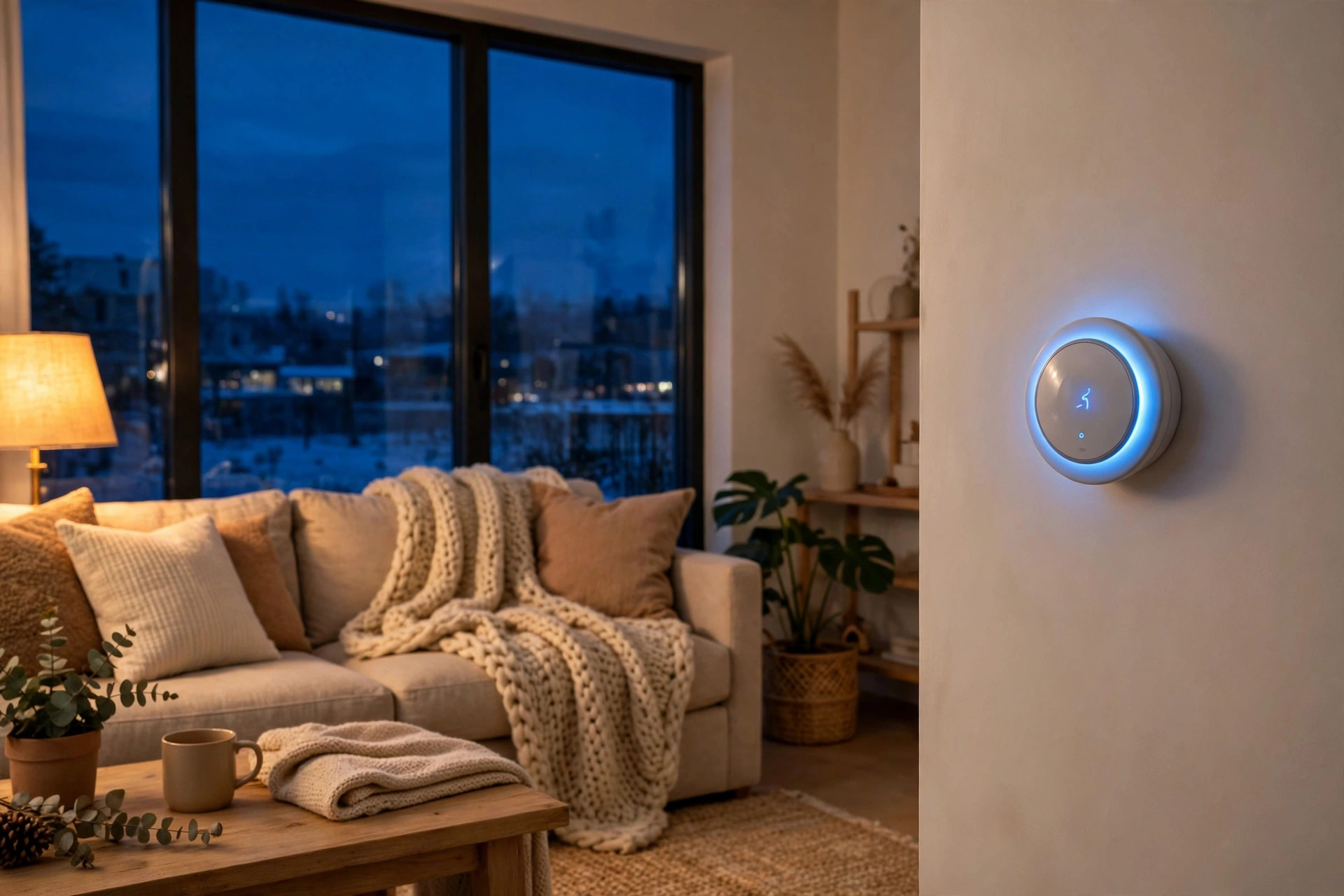
Every house has a hot room and a cold room. One bedroom bakes in the afternoon sun while another stays chilly all morning, and the thermostat in the hallway has no idea. It reads one spot and heats or cools the whole house to match that one spot. A smart thermostat setup fixes the argument by learning the rooms you actually live in, not just the hallway.
1. Your thermostat only knows one room
That little box on the hallway wall is the only temperature the system knows. If the hallway is comfortable, the system stops, even if the back bedroom is five degrees warmer and the front room is five degrees cooler. The rooms did not change. The thermostat just never asked them. Before you blame the heater or the air conditioner, check where the thermostat lives. A thermostat in a drafty hallway, next to a sunny window, or above a lamp is reading a room that does not exist.
2. Escondido afternoons make it worse
North County days swing. A cool morning turns into a warm afternoon, then the evening cools off fast. West facing rooms soak up the late sun and stay warm long after the rest of the house has cooled down. A single schedule set for one temperature all day cannot keep up with that swing. The fix is not to set the thermostat lower and hope. It is to let the system follow the day: cooler in the morning, easier in the afternoon, and comfortable again by bedtime.
3. Room sensors put comfort where you sleep
A room sensor is a small temperature sensor you put in the room that matters, usually the bedroom. At night, the thermostat stops listening to the hallway and starts listening to the bedroom instead. If the bedroom is too warm, the system runs a little longer. If it is fine, the system rests. Nothing about the house changes. The thermostat just stops guessing about the room you sleep in and starts measuring it. One sensor in the bedroom is where most houses should start.
4. Schedules that follow your day, not the clock
A good schedule is built around when rooms are used, not around round numbers on a clock. The bedrooms matter at night. The living room matters in the evening. Nobody needs the guest room held at the perfect temperature all week. Set the system to warm the bedroom before bedtime, ease off overnight, and bring the living areas back to comfortable before everyone gets home. A schedule that matches your day uses less energy than one that fights it, and the house feels better at the hours you are actually in it.
5. When it is not the thermostat
Honest limit: a smart thermostat cannot fix a closed vent, a blocked return, or a west facing window with no shade. If one room is always hot, walk the house first. Is the vent open? Is furniture sitting on it? Is the sun hitting that window all afternoon? A room sensor will tell you the truth about the temperature, and sometimes the truth is that the room needs a vent adjusted or a blind closed, not a new thermostat. A free home visit looks at the whole picture before recommending anything, so the fix matches the real problem.
Want every room to agree on the temperature? That is exactly what a free home visit is for. We look at the house you already have, find the thermostat and sensor setup that fits it, and hand you a written plan before you commit to anything.