
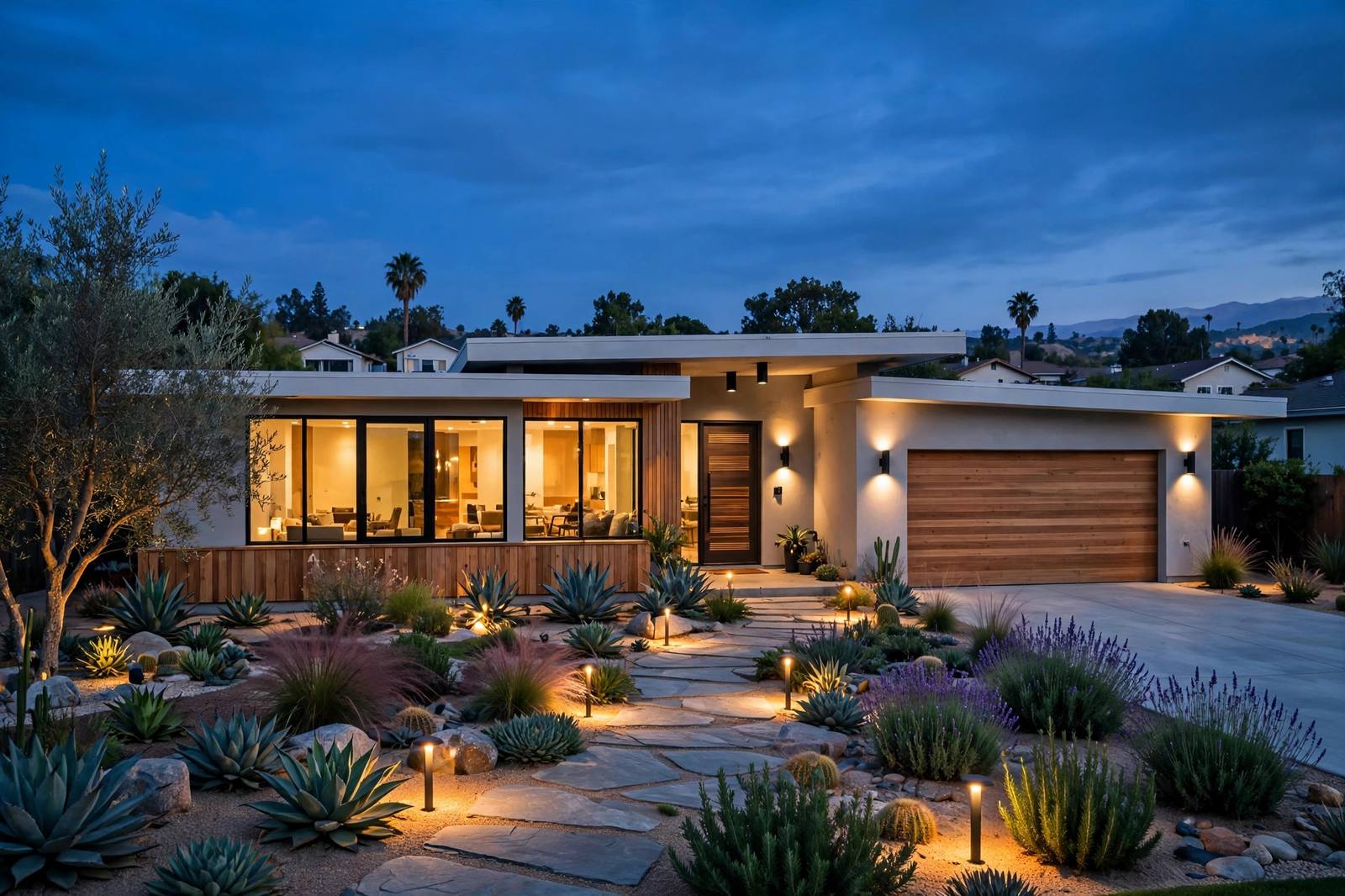
In Escondido the sun does real work on a house. By midmorning it is pouring through the west windows. By three in the afternoon the living room is bright enough to wash out the television and warm enough that the air conditioning runs longer than it should. Curtains help, but somebody has to remember them, twice a day, every day. Automated blinds remember for you. They open with the morning, close before the afternoon heat, and shut for privacy at night, on a schedule you set once.
1. The afternoon sun problem
Most Escondido homes have one side that takes the worst of it, usually the west facing windows in the living room or the main bedroom. The glare lands right where you sit in the evening. The sun fades the sofa and the rug a little more every summer. And the room gets warm enough that you close the blinds by hand at three and forget to open them again until the next morning, so the room sits dark when it could have had a perfectly good morning. The problem is not the windows. It is that adjusting blinds by hand, room by room, is a chore nobody keeps up with.
2. What automated blinds actually do
A small quiet motor sits inside the roller or the headrail, and the blind moves on its own. You set the times, or the blinds follow the light, and they open in the morning and close before the heat builds. Most can also answer to a voice command or a button by the door, so "close the living room" works the same way "turn off the lights" does. Roller shades are the common pick for big windows. Honeycomb shades add a layer of insulation for the rooms that run hot or cold. Roman shades and wood blinds fit the rooms where the look matters as much as the light. They all do the same job: the right amount of light at the right hour, without a walk around the house.
3. Where they help most
Start with the windows that cause the trouble. West facing glass in the living room is first, then the main bedroom, where blinds that open on their own make waking up easier than an alarm in a dark room. Hard to reach windows come next: the high window over the stairs, the skylight, the tall glass beside the front door. Those are the blinds that never get adjusted at all, because reaching them takes a step stool. A motor fixes that completely. And a room with a television or a desk facing the window is a good candidate too, because glare is a daily annoyance, not a seasonal one.
4. Three things to check before you pick them
First, how they get power. Most automated blinds run on a rechargeable battery tucked inside the headrail, charged every few months from a plug, which means no wiring and no electrician. Larger or heavier blinds may want a wired connection instead. Second, how they are measured. An inside mount sits neatly within the window frame. An outside mount covers the whole frame and blocks more light around the edges. The choice changes the look, so measure it before you order, not after. Third, how they join the rest of the house. Blinds that live in the same app and answer the same voice commands as your lights are the ones you will actually use. A blind with its own separate remote ends up as one more remote in a drawer.
5. No cords, and that matters
Automated blinds have no looped cords hanging by the window. That is a small detail until there are kids or pets in the house, and then it is the detail that matters most. A cordless window is a safer window, and it is also a tidier one. If your current blinds still have cords, replacing the ones in the kids rooms and the playroom is worth doing before the ones in the living room, even if the living room is where the sun is worst.
Want blinds that follow the sun for you? That is exactly what a free home visit is for. We walk the house you already have, check which windows take the worst of the afternoon, and hand you a written plan before you commit to anything.