
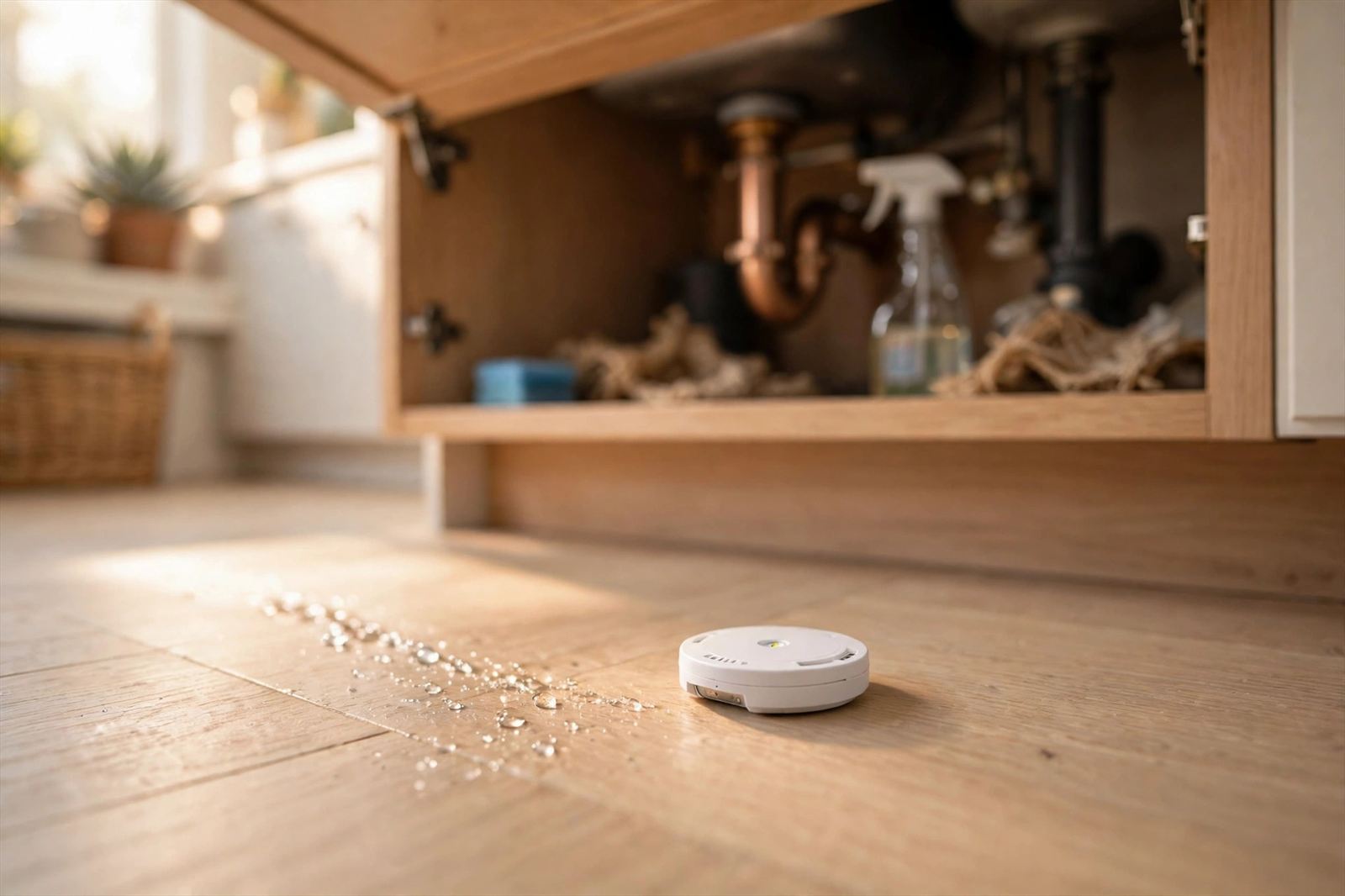
Nobody finds a leak when it starts. A leak starts as a slow drip under the sink, a damp spot behind the washing machine, a water heater quietly giving up in the garage. By the time you see it, the floor has already had its say. A leak sensor is a small device that sits on the floor where water goes first, and the moment it feels water it tells your phone. That is the whole job, and for an Escondido house heading into the rainy months, it is a job worth having done.
1. Leaks start quiet
A burst pipe makes a noise. Almost nothing else does. A supply line under the kitchen sink drips a little at a time. A washing machine hose weeps where it meets the wall. A water heater rusts from the inside and the first sign is a damp ring on the garage floor. These are slow leaks, and slow is what makes them expensive. They run for days or weeks before anyone notices, soaking the cabinet floor, the drywall, and the subfloor underneath. The fix for a slow leak is not a louder alarm. It is a sensor sitting in the right spot, listening for the one thing you cannot hear.
2. Where water goes first
Water follows gravity and habit, so it ends up in the same few places in almost every house. Under the kitchen sink, where the supply lines and the drain meet. Behind the washing machine, where the hoses connect. Next to the water heater, usually in the garage, where the tank sits on the floor. Under the fridge, where the ice maker line runs. Those four spots cover most of the leaks a house will ever have. A sensor in each one is a small setup, and it is the setup we start with on a free home visit, because guessing about the fifth spot is not worth it when the first four do the work.
3. What the sensor does when it feels water
The sensor sits flat on the floor, and its only job is to notice water touching it. The second it does, your phone gets an alert. That is the point: the alert reaches you while the leak is still a drip, not after a weekend away turns it into a flood. Some setups go one step further and pair the sensor with a valve that shuts the water off on its own when a sensor trips. The alert alone is enough for most houses. The shutoff is there for the houses where nobody is home during the day, or where a leak would run for hours before anyone walked past it.
4. The rainy months are the test
November is when Escondido houses start getting tested. The first rains find the weak spots: the hose bib that drips against the wall, the water heater working harder on cold mornings, the laundry running more often with everyone home. A leak sensor does not care about the weather. It cares about water where water should not be, and the rainy months are when that matters most. If you are going to put sensors in, put them in before the rain settles in, not after the first wet cabinet.
5. Three spots to check first in your house
Before any sensor goes in, walk the house and look at three things. First, the water heater: crouch down and look at the floor around the base for rust stains or dampness. Second, the washing machine: pull it out a few inches if you can and look at the hoses and the floor behind it. Third, under the kitchen sink: run your hand along the supply lines and the bottom of the cabinet and feel for dampness. If any of those three feels wet and you do not know why, that is the first place a sensor belongs. If all three are dry, they are still the first three places a sensor belongs, because dry today is not a promise about next month.
Want your house to tell you about a leak before the floor does? That is exactly what a free home visit is for. We walk the house you already have, find the spots where water would go first, and hand you a written plan before you commit to anything.